
Bourbonnais Criminal History Checks
A village report, county booking, court docket, and ISP response are related but not interchangeable. First define whether the goal is to read the incident, confirm current custody, learn what charge was filed, or inspect Illinois conviction information.
- Use the Bourbonnais Police or Village FOIA channel for the police-created incident or arrest report.
- Provide the report number, or narrow the request with date, time, location, and record type.
- Check the Kankakee County sheriff roster if a Bourbonnais arrest led to county admission.
- Search CourtView for filed state charges, docket events, and final disposition.
- Use ISP UCIA for its public conviction product or fingerprint-based Access and Review for your own broader Illinois record.
Repeat a CourtView name search with known variants. Compare case number, date, and charge details before deciding that a result belongs to the person sought.
Bourbonnais Police Support Services
Bourbonnais Police Support Services connects several functions that readers may otherwise send to different offices. The department’s 2024 annual report records work involving public-record requests, insurance reports, ordinance tickets, adjudication, registrations, fingerprints, and court notices. These are workload measures, not crime counts.
The official Bourbonnais Police Department page is the starting source for current village police information.
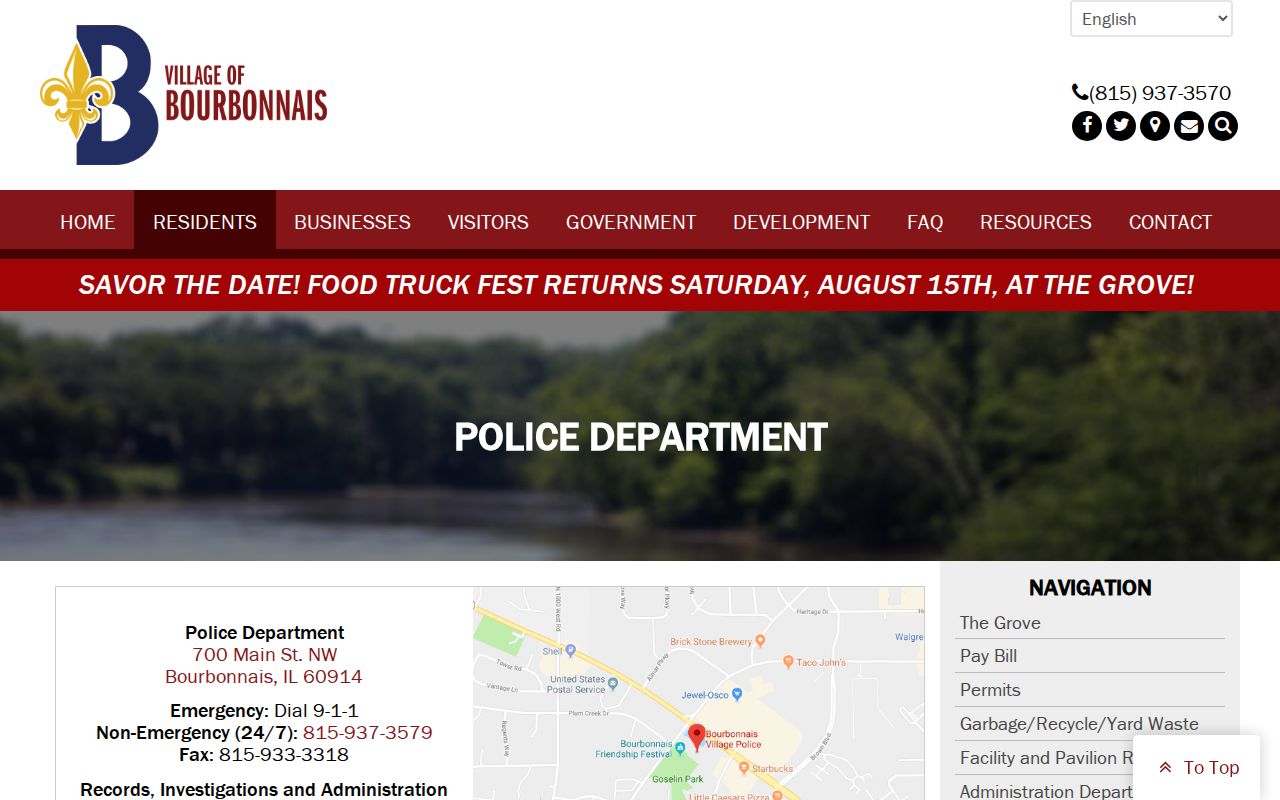
The village page confirms that Bourbonnais maintains a local police channel within the larger Kankakee urban area.
Records at Bourbonnais Police
For a Bourbonnais incident, request the report through the Village or police FOIA workflow. The request should identify the police report or incident number when known. Without that number, provide the incident date, time, location, and a precise record description. State whether electronic delivery, paper copies, or inspection is preferred, and answer the commercial-purpose question required by the process.
Incident narratives, crash material, and body-camera records can have different review needs. Do not infer a fee or release rule from the annual report’s workload totals. Confirm the live form, any fee, and required fields with the department. Illinois law permits redaction of private data, juvenile or victim details, confidential sources, and investigative material when the statutory standard is met.
Bourbonnais Records by the Numbers
The 2024 police annual report counted 84 FOIA requests and 339 insurance requests. It also recorded 292 ordinance tickets, 117 adjudication hours, 87 sex-offender registrations, 251 background or DCFS requests, 67 fingerprint requests, and 227 officer court notices. Those figures describe the work moving through Support Services.
| Reported activity | What it means |
|---|---|
| 84 FOIA requests | Village record-access workload, not 84 criminal events |
| 292 ordinance tickets | Local enforcement activity that may use adjudication |
| 87 registrations | Local registration work for qualifying village addresses |
| 67 fingerprint requests | Services counted by the village, with purpose and method to confirm |
A fingerprint-service count does not prove that every transaction was an ISP Access and Review request. Ask about purpose, transmission method, identification, appointment needs, and cost before visiting.
Booking and Arrest Records in Bourbonnais
No separate Bourbonnais jail was verified. When a village arrest leads to detention, Kankakee County Corrections is the relevant custody source. The sheriff roster can show current custody and booking facts. A released person may no longer appear on a live roster, so an older incident may require a focused village request and a CourtView search.
The village remains custodian of its narrative even after county booking. Corrections holds intake data, received charges, bond or pretrial status, and release information. Neither source proves guilt. The prosecutor decides what to file, and the Circuit Court records the final result. The county arrest search overview gives more detail on booking channels without replacing the village report request.
Three Bourbonnais Record Views
A common mistake is treating the first matching screen as a full history. The Bourbonnais police report describes the agency’s allegations and observations. A county booking documents custody and intake. CourtView shows the filed case and its progress.
| Village report | Incident facts, responding agency, allegations, and releasable narrative |
|---|---|
| County booking | Admission, arresting agency, received charges, custody and release data |
| Court docket | Filed counts, events, orders, disposition, sentence, and financial entries |
A received booking charge may differ from the prosecutor’s filed count. Always read the final disposition for each count.
The Bourbonnais Municipal Court File
Bourbonnais does not operate a separate Illinois criminal court. Felony and misdemeanor cases go to the Circuit Court of the Twenty-First Judicial Circuit. Village ordinance matters can use local administrative adjudication. The annual report’s ordinance-ticket and adjudication-hour totals reflect that local work, not a new tier of criminal convictions.
| Court Name | Kankakee County Circuit Court for state criminal prosecutions |
|---|---|
| Local Process | Village administrative adjudication for eligible ordinance matters |
| Case Types | State felonies and misdemeanors at Circuit Court; local ordinance matters through the proper village channel |
| Lookup | Kankakee CourtView for circuit cases; confirm village adjudication access with Bourbonnais |
| Docket Content | Filed counts, status, events, public orders, disposition, and sentence |
| Copies | Circuit Clerk for state-court files; Village for its own administrative records |
A citation absent from CourtView may be an ordinance matter, a filing delay, a spelling mismatch, or a restricted record. Absence alone proves none of those possibilities.
Bourbonnais Registration Work
The annual report’s 87 sex-offender registrations show that Bourbonnais Police serves as a local registration authority for qualifying village addresses. That workload does not mean the village publishes an independent registry. Public searches run through the statewide Illinois Sex Offender Registry.
A registry address can change, and jurisdiction depends on where the person resides or otherwise triggers a duty. Use the statewide search and contact the correct law-enforcement agency when an address or boundary is unclear. Registry information supports lawful community awareness. It must not be used to harass or injure anyone.
How Bourbonnais Records Reach the County
A Bourbonnais officer creates the first agency record. County Corrections creates a booking if the person enters the jail. The State’s Attorney chooses the filed charge, and the Circuit Clerk maintains the case. Later disposition reporting can connect the court outcome to the Illinois State Police repository.
Record flow: Bourbonnais Police Department › Kankakee County Circuit Court › Illinois State Police Bureau of Identification
Each handoff can take time. For a recent event, begin with the village and county sources. For the formal case outcome, use CourtView and the clerk. ISP UCIA is broader across Illinois but limited to the public conviction-information product.
Bourbonnais Records and UCIA Scope
The Uniform Conviction Information Act makes ISP-maintained conviction information available through the state process. It is not a copy of every Bourbonnais police report, every arrest allegation, or every court document. The city and county channels remain necessary when those records are the actual goal.
The ISP criminal-history overview explains that public conviction-information scope.
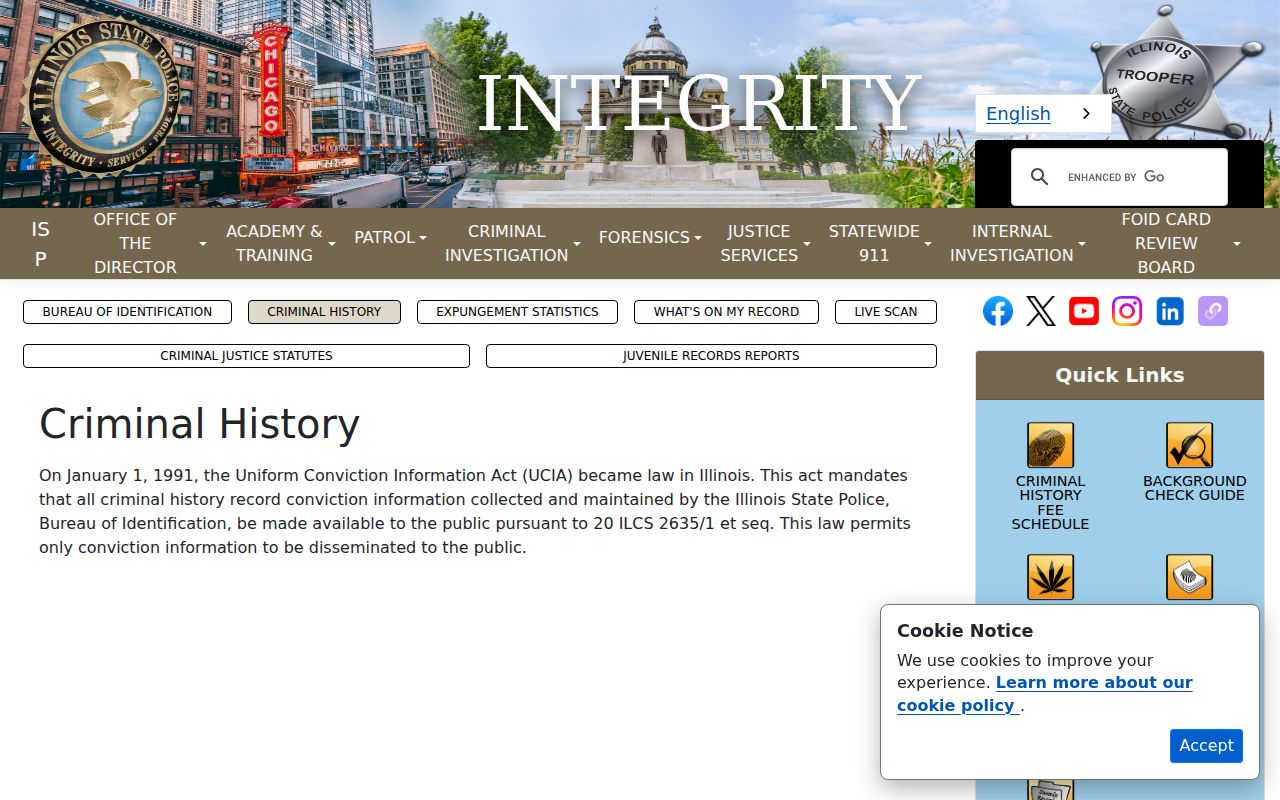
The state source helps prevent a Bourbonnais request from being mistaken for an unrestricted full rap sheet.
Bourbonnais Disposition Reporting
Fingerprint and court reporting build the state record over time. An arresting agency reports identifying and transaction data through criminal-justice channels. Prosecutors and courts then supply charge and disposition information. A delayed or mismatched disposition can leave sources out of step.
The ISP criminal-justice statutes page gathers the governing repository-reporting authorities.
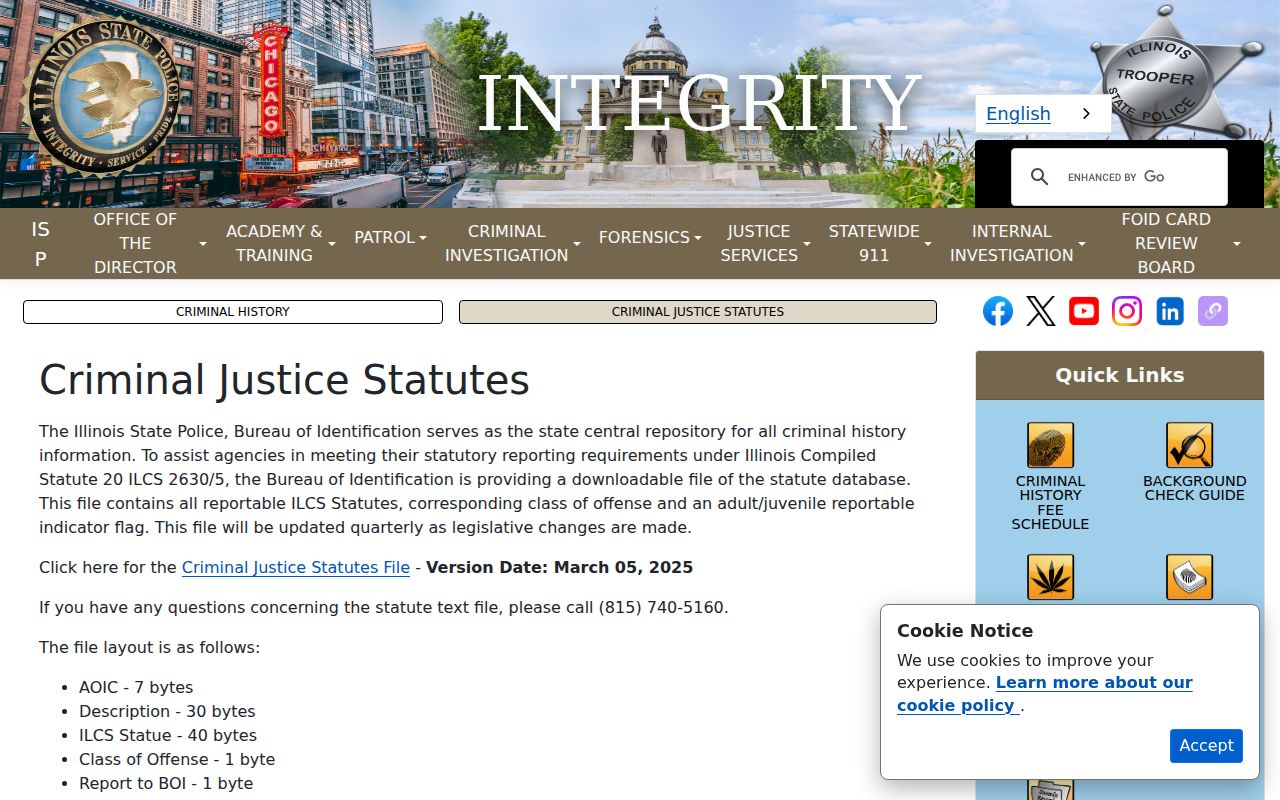
This reporting layer explains why a village event, county docket, and state response may not update on the same day.
Older Bourbonnais Arrest Records
A person who is not on the sheriff’s current roster may have been released, transferred, or never admitted to the county jail. The absence does not answer whether Bourbonnais Police made an arrest or whether the State’s Attorney filed a case. Work backward from any known report number, arrest date, or court case number.
Ask Bourbonnais for the village-created report. Search CourtView across a tight date range and review all matching docket results. If the public interface does not expose an older file, contact the Circuit Clerk at 450 East Court Street in Kankakee or call 815-936-5700. The clerk can explain public copy and certification routes. For a sheriff-created corrections record that is no longer live, use the county public-safety request process. These separate steps preserve the difference between police facts, custody, and adjudication.
Historical gaps also have more than one cause. An older docket may not have been converted for full remote access. A name may have been entered differently, or a case may carry a restricted access class. An ordinance file may remain with the Village rather than appear as a state criminal prosecution. Sealing and expungement also affect ordinary public access in different ways. Ask the relevant custodian to confirm the search method without requesting protected content. Keep copies of the request, response, and any case numbers so later checks can follow the same record trail.
Bourbonnais Record Access Rules
Illinois FOIA applies to existing nonexempt village records. A noncommercial request generally receives a response within five business days, subject to a noticed statutory extension. Commercial requests follow a different schedule. The Circuit Clerk, not village police, supplies court files.
Key Statutes:
Illinois FOIA, 5 ILCS 140 governs access, response timing, redaction, and exemptions for village records.
Uniform Conviction Information Act, 20 ILCS 2635 defines the public ISP conviction-information product.
Criminal Identification Act, 20 ILCS 2630 governs criminal-history reporting and clearing procedures.
Illinois Supreme Court Rule 8 controls court-record access classifications.
Ask for segregable public portions when only part of a Bourbonnais record is exempt. Then verify allegations against the court’s final result.