
Criminal Court Cases in Kankakee County
Kankakee County belongs to the Twenty-First Judicial Circuit. Its Circuit Court is the Illinois trial court of original jurisdiction for felony and misdemeanor prosecutions, criminal traffic cases, and other state matters. Illinois does not operate a separate municipal criminal court for each city or village. A local ordinance matter may use administrative adjudication, while a state criminal charge proceeds in Circuit Court. That split explains why an ordinance ticket may not appear as a criminal case.
Circuit Clerk Sandra Cianci's office preserves the official Kankakee County case file, accepts filings, records court money, and supplies public copies or certified dispositions. CourtView is the remote index. The clerk's counter is the fallback when a document is not downloadable, a case is old, certification is needed, or the correct number is unclear. The Illinois Courts circuit-court overview describes this court structure.
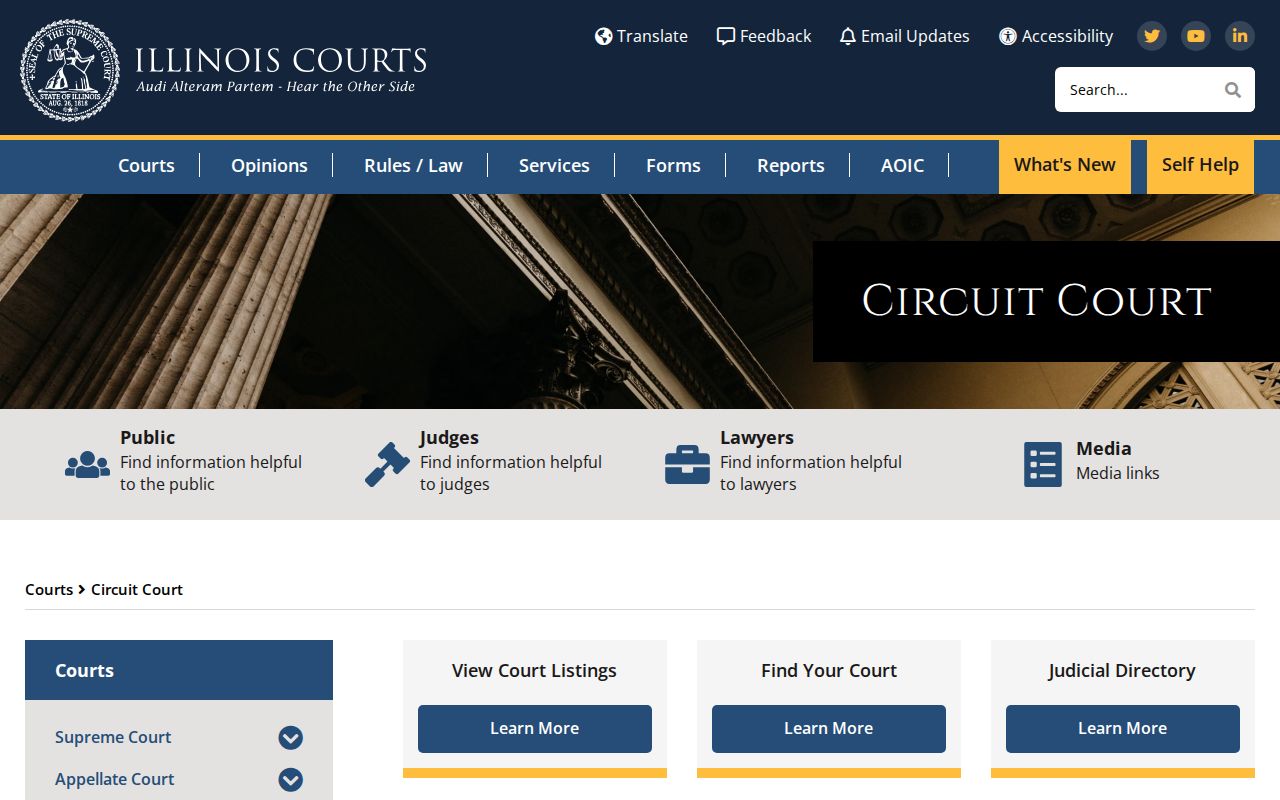
The state overview places the local docket in its proper setting: Kankakee County criminal cases are trial-court records, not entries in one unrestricted statewide trial-court database.
Inside Kankakee County CourtView
Start with the local CourtView/eAccess portal. Search by a complete name, repeat likely surname variants, and add a middle initial when known. Never identify a person by name alone. Use nonrestricted details such as filing year, case type, and the full case number to separate namesakes. Open each possible docket and compare every count because one charge may be dismissed while another reaches judgment.
| Search field | Best use |
|---|---|
| Full name | Broad starting point; repeat known spellings and initials. |
| Case number | Strongest way to return to one identified Kankakee County file. |
| Filing year | Narrows common names and separates older proceedings. |
| Case type or status | Distinguishes criminal, traffic, and other docket categories where available. |
| Event date | Checks the next listed hearing, subject to clerk confirmation. |
A no-result screen is not proof that no record exists. Spelling, an old file, delayed entry, an ordinance forum, or a sealed, expunged, impounded, or confidential classification can affect remote display.
Once a likely match appears, note the court name, filing date, case class, and all displayed parties before opening events. Preserve the number exactly as shown, including its year and category code. Searching the same person more than once can be useful when records use an alias, a former surname, or a middle initial. The docket should then be read from the earliest filed event through the latest disposition, not from a search-result summary alone.
Kankakee County Case Record Searches
Use a layered search. CourtView answers the index question, while the Circuit Clerk supplies the public document and certifies the result. Illinois reviewing-court tools serve appeals, not the full local trial docket.
- Search CourtView by full name and known variants.
- Narrow by year or case type, then confirm identity with lawful corroborating details.
- Copy the full case number and review each count, amendment, dismissal, plea, judgment, and sentence.
- Check scheduled events, then call the clerk before relying on a calendar entry.
- Ask the clerk for the public charging paper, judgment, sentence order, copy, or certified disposition when the docket shows only an event line.
The Kankakee Circuit Clerk homepage is the official starting point for clerk services and current notices.
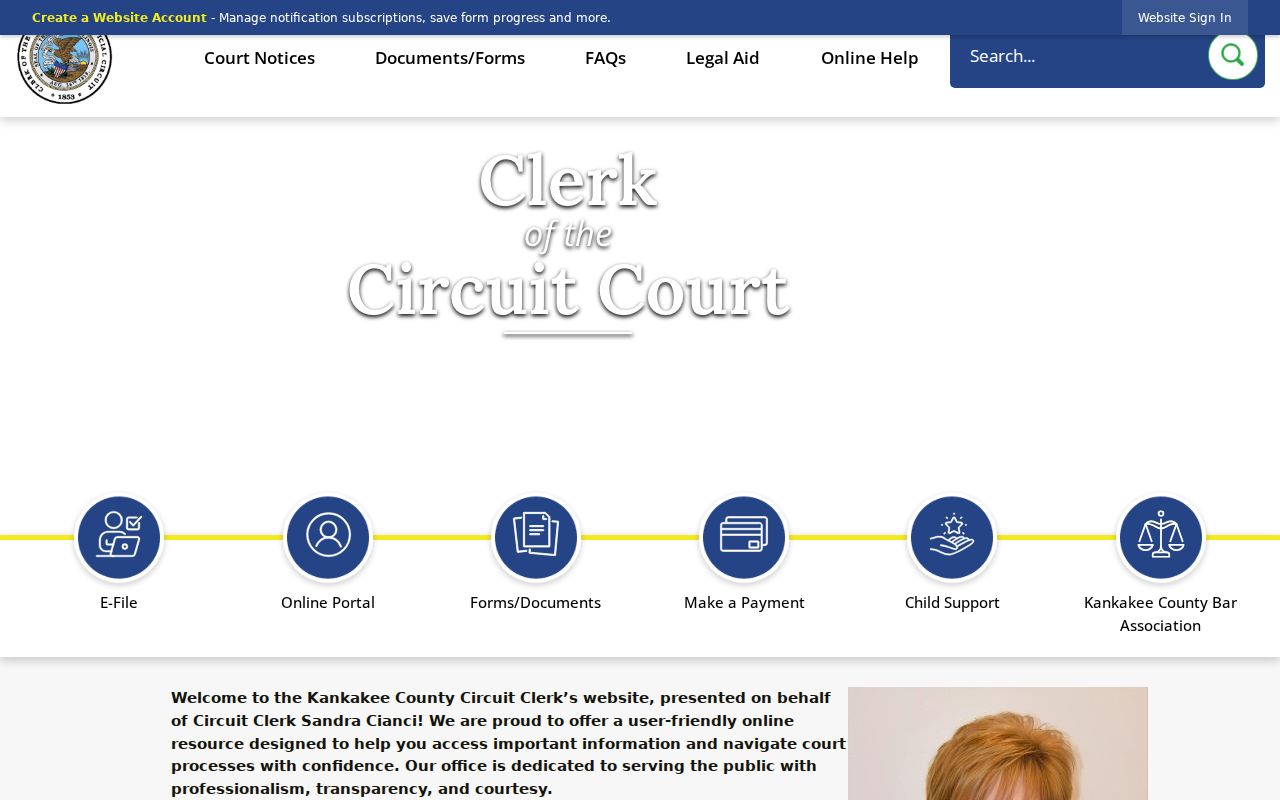
That office, rather than the arresting department or ISP, controls the authoritative Kankakee County court judgment.
What a Criminal Case File Contains
A docket traces prosecution, not just the first allegation. Read at the count level. The State's Attorney may file a different charge from the booking entry, amend a count, or decline to file it. “Disposition” means the outcome of a count, such as dismissal, acquittal, supervision, or conviction. The final judgment and sentence control over an early charge label.
| Case identity | Full case number, filed date, case type, status, plaintiff, and defendant display name. |
|---|---|
| Charges | Count number, offense text, Illinois statute, class, and filed or amended status. |
| Participants | Judge or division and attorney appearances. |
| Docket events | Appearances, motions, orders, pleas, trials, warrants, and notices of appeal. |
| Disposition | Dismissal, acquittal, supervision, plea, verdict, or judgment by count. |
| Sentence | Custody, probation, conditional discharge, credit, restitution, fines, costs, and conditions where public. |
| Document access | Whether a filing is remotely available or must be requested at the clerk counter. |
Public views restrict Social Security numbers, protected birth data, minor and victim identifiers, sealed material, and other confidential information. Missing private data is a feature of lawful access, not a defect in the file.
Financial entries can include fines, costs, restitution, and payments, but they do not replace the judgment or sentencing order. Likewise, a scheduled hearing is not an outcome. Compare the event list with the plea, judgment, disposition date, and sentence fields. When terms conflict or a docket abbreviation is unclear, ask the clerk for the public order rather than guessing from a short code.
When Kankakee County Dockets Lack Downloads
An event line can show that a complaint, order, judgment, or sentence was filed without offering the document itself. Write down the full case number, document title, and filing date. Call the Circuit Clerk at 815-936-5700 or visit the public counter at 450 E. Court Street, Kankakee, IL 60901. Ask whether the item is public, what copy or certification options exist, and how the office accepts the request. The research did not verify a current local fee schedule, so confirm costs with the clerk.
The official Kankakee courthouse directory is the best source for current access details.
The directory also helps readers confirm accommodations and operational information before a courthouse visit.
Criminal Case Stages in Kankakee County
A criminal file grows in sequence. Police arrest charges are only the start. The State's Attorney chooses the filed counts, and the court records each later event. An initial appearance may address rights, counsel, release, or detention. Arraignment states the filed charge and takes a plea. Discovery, motions, and hearings follow. A negotiated plea or trial produces a judgment, then sentencing and possible postjudgment or appellate work.
Case flow: Charges Filed › Arraignment › Pretrial › Plea or Trial › Disposition › Sentencing
Complaint, information, and indictment are charging documents. None is a finding of guilt. A “nolle prosequi” entry means the prosecutor formally chose not to proceed on that charge at that time. Court supervision is an Illinois outcome that may avoid a judgment of conviction after successful completion, but clearing eligibility still depends on the offense and statute.
From Kankakee County Arrest to Filed Count
One incident can produce distinct records. The arresting agency writes its report. Corrections creates a booking record if the person enters the jail. Prosecutors then decide whether and what to charge. Only after filing does the Circuit Clerk open the court case. Fingerprint and disposition data may also reach the Illinois State Police repository. These records can disagree without any one of them being the same product.
A booking charge proves that an allegation accompanied intake. It does not prove the prosecutor filed that count, and it does not prove guilt. For the arrest and custody side of that trail, use the county Arrest Search. For the legal outcome, return to the Kankakee County docket and read the final disposition for each count.
Access Rules for Case Records
Illinois Supreme Court Rule 8 uses Public, Impounded, Confidential, Sealed, and Expunged classifications. Public case information can be inspected through approved channels, but remote access may be narrower than counter access. Impounded or confidential material is not public merely because other docket lines remain visible. Sealing restricts ordinary public view. Expungement generally removes or destroys eligible records as the governing order directs.
Illinois FOIA governs agency records, yet court files should ordinarily be requested from the Circuit Clerk through court access procedures. The clerk also explains its FOIA and records-request routing.
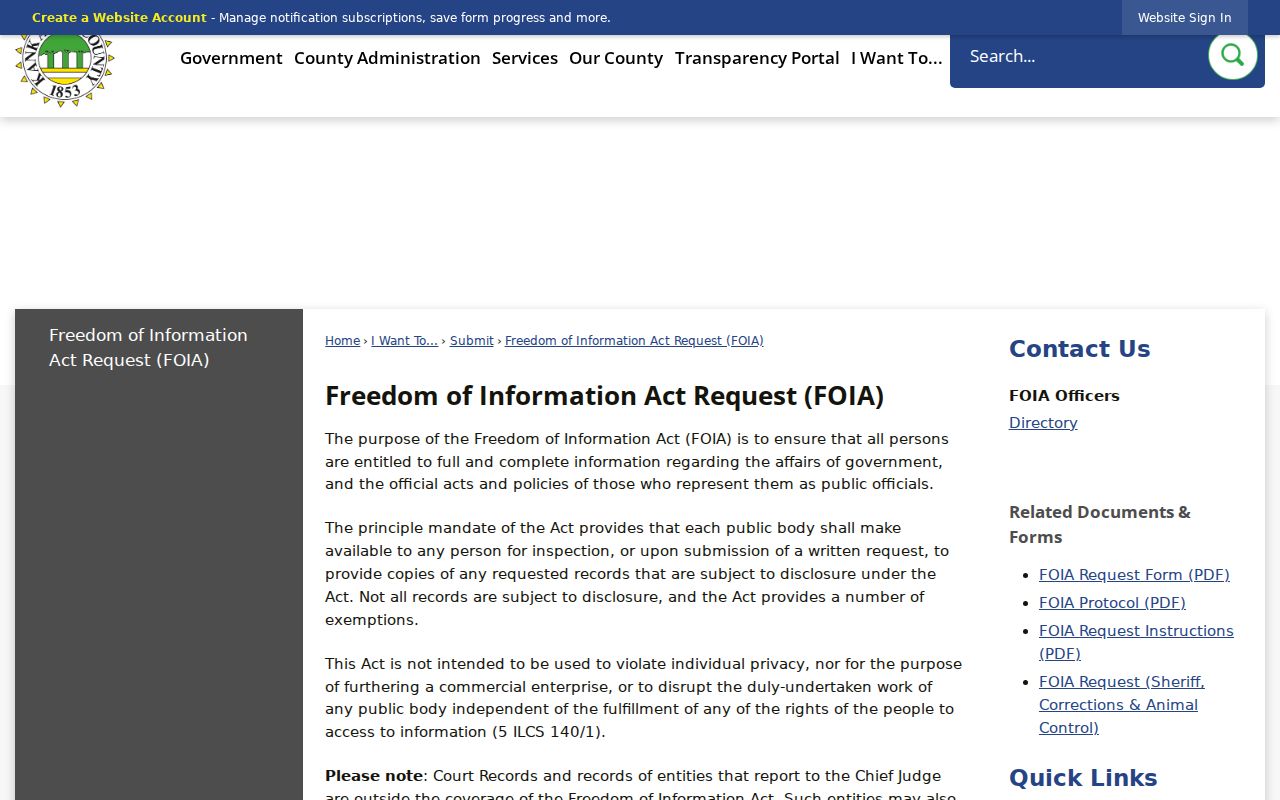
The guidance helps prevent a court-document request from being sent to the sheriff or another office that does not maintain the case file.
Kankakee County Appeals and re:SearchIL
Appeals from Kankakee Circuit Court go to the Illinois Appellate Court, Third District. re:SearchIL now offers free remote public access to eligible, nonconfidential reviewing-court filings made on or after April 1, 2025, with access effective May 1, 2025. It does not turn into a complete statewide public Circuit Court criminal search, and the circuit record on appeal is excluded from that expanded reviewing-court access.
Keep the systems separate. Use CourtView and the local clerk for the Kankakee County trial file. Use the official reviewing-court resources for the appeal. Federal criminal matters arising in the county belong to the U.S. District Court for the Central District of Illinois and use PACER, not CourtView.
Certified Kankakee County Case Dispositions
A docket printout can help someone understand their own case, but it is not always a certified court record. When an authoritative outcome is needed, identify the exact case and ask the Circuit Clerk for a certified disposition or certified judgment. Supply the full case number when possible. If searching by name, include enough lawful detail to avoid a namesake error.
Older Kankakee County files may remain with the clerk or may have moved under Illinois Regional Archives Depository schedules. Start with the clerk, then use the Illinois State Archives Kankakee guide if the office directs historical research there. Do not assume a missing digital docket means the older case was sealed or destroyed.