
Kankakee Criminal History Checks
Begin at the office closest to the event. Kankakee Police Department holds the incident or arrest narrative it created. Kankakee County Corrections holds jail intake and current custody data. The Circuit Clerk holds the filed case and final result. That split matters because an arrest allegation may change before charges are filed, and a filed count may later be dismissed, amended, or resolved on different terms.
A careful Kankakee search uses this order:
- Ask Kankakee Police Records & Technical Services for the city report, using a report number when known.
- Check county Corrections when the person may have been admitted at Justice Way.
- Search Kankakee CourtView by full name or case number for filed charges and docket events.
- Contact the Circuit Clerk for copies, certification, archived material, or a file not exposed online.
- Use Illinois State Police UCIA or fingerprint-based Access and Review when the question extends beyond Kankakee.
Match more than a name. Compare filing dates, case type, charge text, and disposition. Common names and spelling changes can point to the wrong person.
Kankakee Police Records Counter
Kankakee Police Records & Technical Services is at 385 East Oak Street, Kankakee, Illinois 60901. The published director line is 815-936-8217. This is the focused route for a KPD incident report, arrest report, and other police-created material. The City also names FOIA Coordinator Chenille Evans at 815-933-0490, while police dispatch is 815-933-0417. Emergency calls still go to 911.
A request should describe an existing record. Give the incident or report number, date and time, location, record type, and preferred format. Include contact details so staff can clarify an ambiguous request. The City workflow also distinguishes commercial-purpose requests, which follow different timing rules under Illinois FOIA. Asking a broad question is less useful than naming the exact document sought.
The official Kankakee Police Department page shows the department context for this local channel.
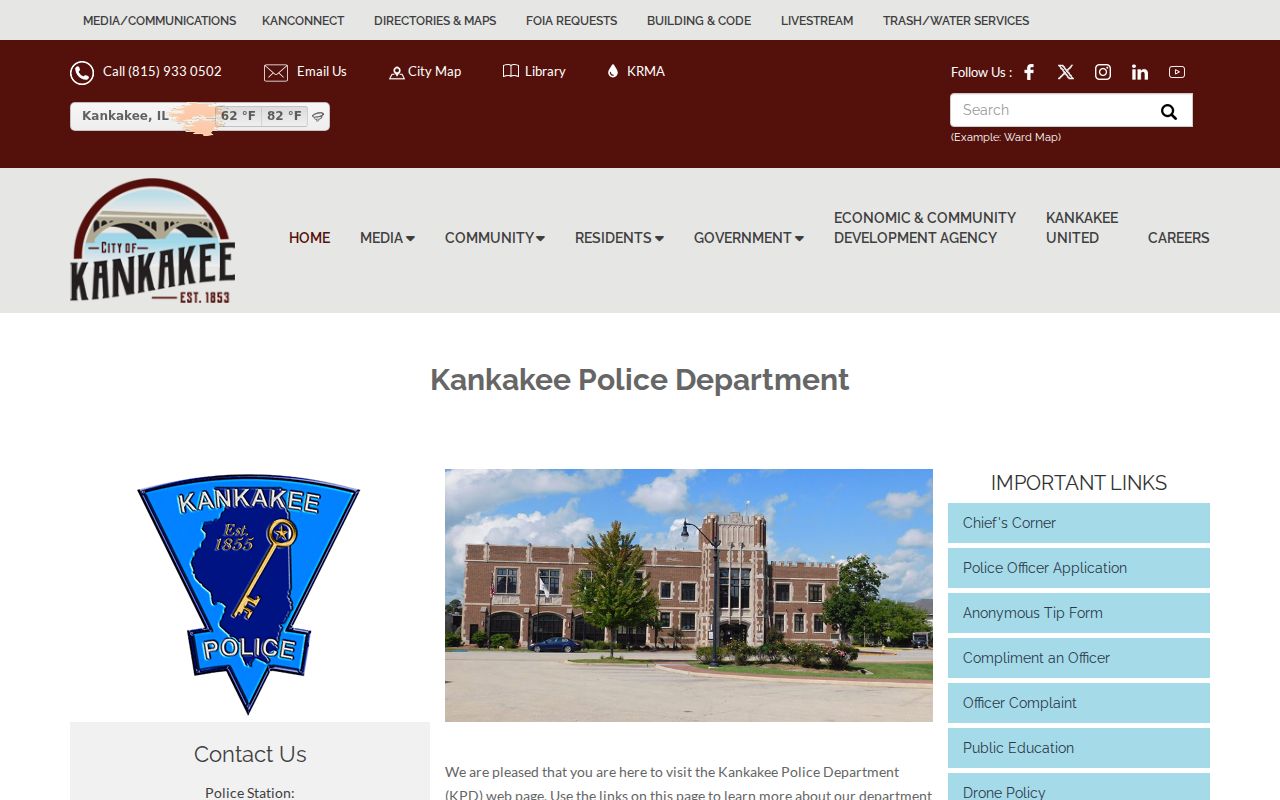
That department page helps confirm that city police, rather than the sheriff, are the first custodian for a KPD report.
Records at Kankakee Police
KPD records are not the same as a county criminal history. An incident report records allegations, observations, witnesses, and investigative steps. An arrest report records the stated basis and circumstances of custody. Neither document proves guilt. The Circuit Court judgment controls the court outcome, while an ISP response reflects the state product requested.
The City may release a record through its routine process or under the Illinois Freedom of Information Act. It may redact victim data, juvenile material, private identifiers, medical details, confidential sources, or information whose release would cause a harm recognized by law. A partial exemption does not always justify withholding every segregable part. When a response removes material, read the cited basis and ask whether a redacted copy can be supplied.
The City identifies the local technical and records function on its Records & Technical Services page.
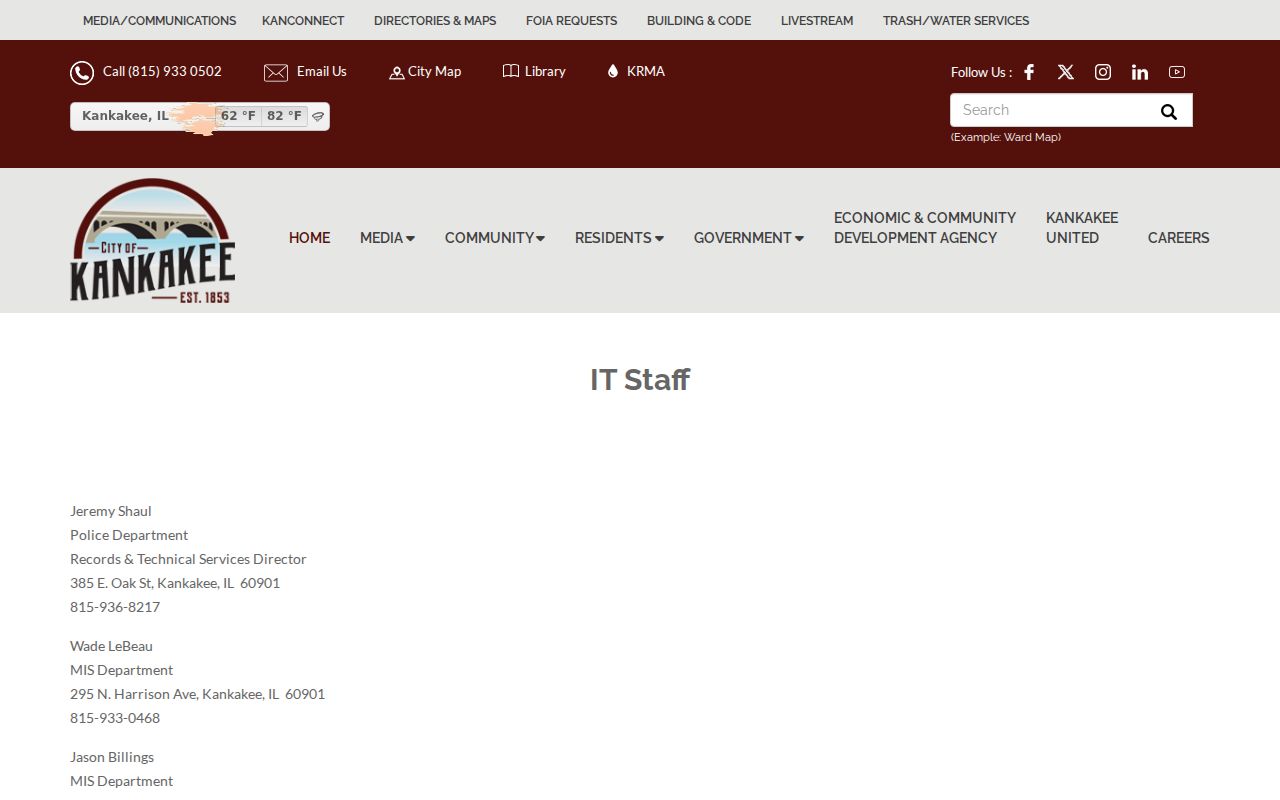
This source points requesters to the city office that manages Kankakee police records rather than to a county office with a different file.
Kankakee Records at Three Counters
Local geography can cause a practical error. East Oak Street is the city police record stop. East Court Street is the courthouse and Circuit Clerk stop. South Justice Way is the sheriff and corrections stop. All three locations use “Kankakee,” yet each maintains a different record.
| Destination | Record to request |
|---|---|
| 385 E. Oak St. | KPD incident or arrest report |
| 450 E. Court St. | Circuit Court docket, filings, disposition, certified copy |
| 3000 S. Justice Way | County booking, custody, or sheriff-created record |
Choose by creator, not by which building seems most familiar. A county booking does not transfer ownership of the KPD narrative to Corrections.
Booking and Arrest Records in Kankakee
No separate Kankakee city jail was verified in the official research. A person who requires detention may be taken into Kankakee County Corrections at 3000 South Justice Way or another authorized facility. The sheriff’s inmate link can help with current custody. If the roster is unavailable, call Corrections through the sheriff’s published main number, 815-802-7100. The after-hours nonemergency number is 815-933-3324.
The booking record can show intake data, arresting agency, received charges, bond or pretrial status, and release information. It does not replace the police narrative, and it does not prove a conviction. A person may also disappear from a current roster after release even though underlying agency and court records remain. For broader county booking detail, use the Kankakee County arrest search.
Reading Kankakee Cases in CourtView
CourtView is Kankakee County’s local court access system, not a complete Illinois criminal-history search. Search by full legal surname and first name, then repeat known aliases or prior spellings. A case number is the strongest route when available. Date ranges and case-type filters can help separate similar names, but public identity fields may be limited.
A useful result can show the case number, filing date, case type, status, charge or count descriptions, statute codes, court events, and recorded disposition. Documents may not be downloadable even when docket entries are public. The Circuit Clerk at 450 East Court Street remains the authority for public copies and certification. A no-result screen can reflect spelling, delay, an old file, restricted access, or an ordinance matter handled outside a state criminal docket.
The Kankakee Municipal Court File
Illinois does not give Kankakee a separate municipal criminal court. Felony, misdemeanor, and state traffic prosecutions proceed in the Circuit Court of the Twenty-First Judicial Circuit. The City can use administrative adjudication for local code and ordinance matters. An administrative finding should not be called a criminal conviction without checking the authority, the case channel, and the Circuit Court docket.
| Court Name | Circuit Court of the Twenty-First Judicial Circuit for state criminal cases |
|---|---|
| Local Channel | City administrative adjudication may handle ordinance matters |
| Case Types | Felonies, misdemeanors, state traffic cases, plus separate local ordinance proceedings |
| Lookup | Kankakee CourtView, then the Circuit Clerk counter for nonremote records |
| File Contents | Charges, docket events, public orders, outcome, sentence, and financial entries |
| Copies | Request public or certified copies from the Circuit Clerk; fees depend on the requested service |
The distinction keeps a city citation from being mislabeled. It also explains why KPD does not maintain the final state-court judgment.
Kankakee Police Record History
Kankakee’s own police history gives the records system a long local timeline. The department traces a city marshal record to 1867 and a formal reorganization under Illinois municipal law to 1892. Its history states that 23 chiefs and two acting chiefs served after that reorganization. KPD is also CALEA-accredited.
The official policing history preserves that institutional account.
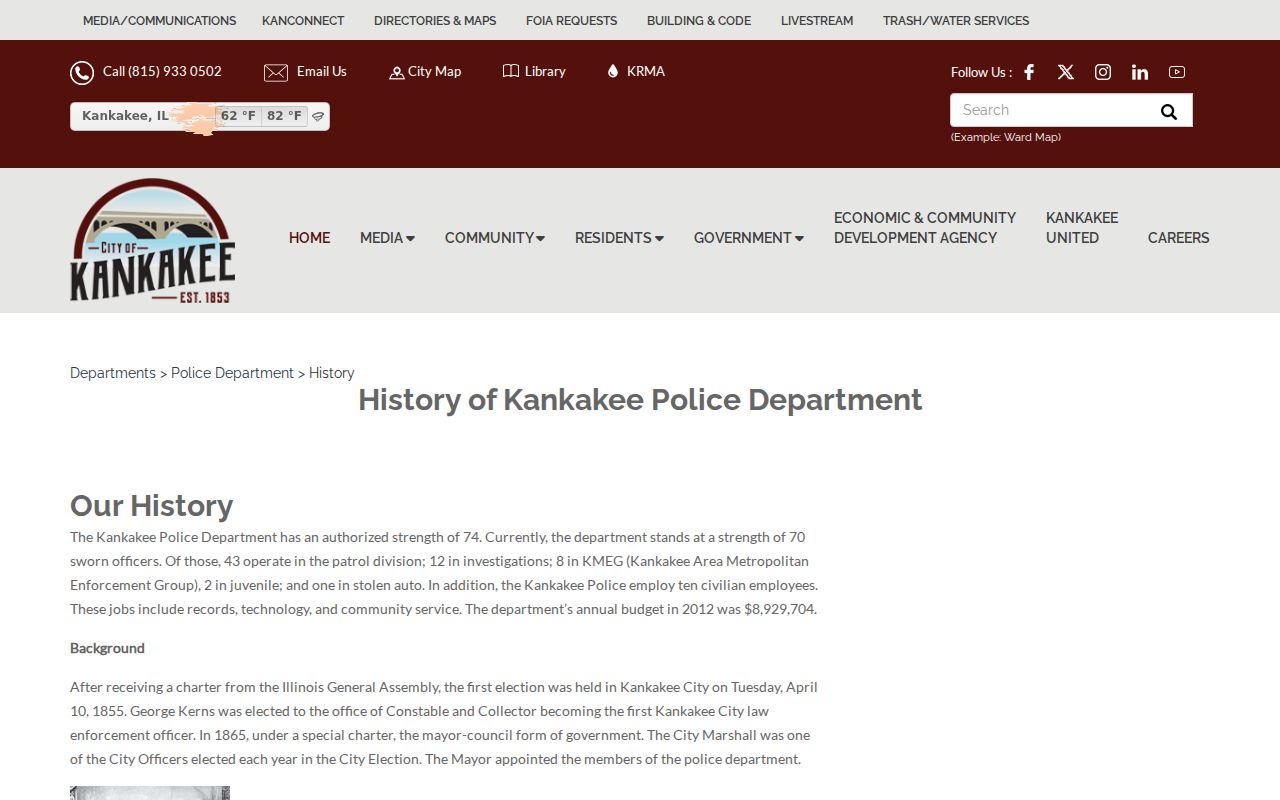
This timeline shows why historical city police material and a modern CourtView docket are separate sources with different custodians and formats.
How Kankakee Records Reach the County
A KPD arrest starts a city agency file. If detention follows, county Corrections creates its own booking record. The Kankakee County State’s Attorney decides whether and what charges to file. The Circuit Clerk then opens and maintains the court case. Court events such as pleas, dismissals, judgments, and sentences belong to that case file.
Record flow: Kankakee Police Department › Kankakee County Circuit Court › Illinois State Police Bureau of Identification
Fingerprint and disposition reporting can connect the arrest cycle to the state repository. Timing gaps occur. For a recent event, city and county records may appear before a state response reflects the final disposition. ISP’s public UCIA product reports Illinois conviction information, while fingerprint-based Access and Review is the proper route for a person to inspect and challenge their broader Illinois record.
Kankakee Expungement Cross-Check
The City of Kankakee publishes unusually practical local clearing guidance. It tells a person to gather CourtView dockets, obtain an ISP fingerprint-based Access and Review response, and compare the records count by count. That comparison can reveal an arrest cycle missing from a name-only court search or a disposition that has not been linked as expected.
The next steps depend on the exact disposition, completion of all sentences, statutory waiting periods, and exclusions. Expungement and sealing are not identical. Expungement generally removes or destroys eligible records as the law directs. Sealing restricts ordinary public access but preserves access for specified purposes. Filing uses statewide approved forms in the county where the arrest or case occurred.
The City’s local expungement instructions show the Kankakee workflow.
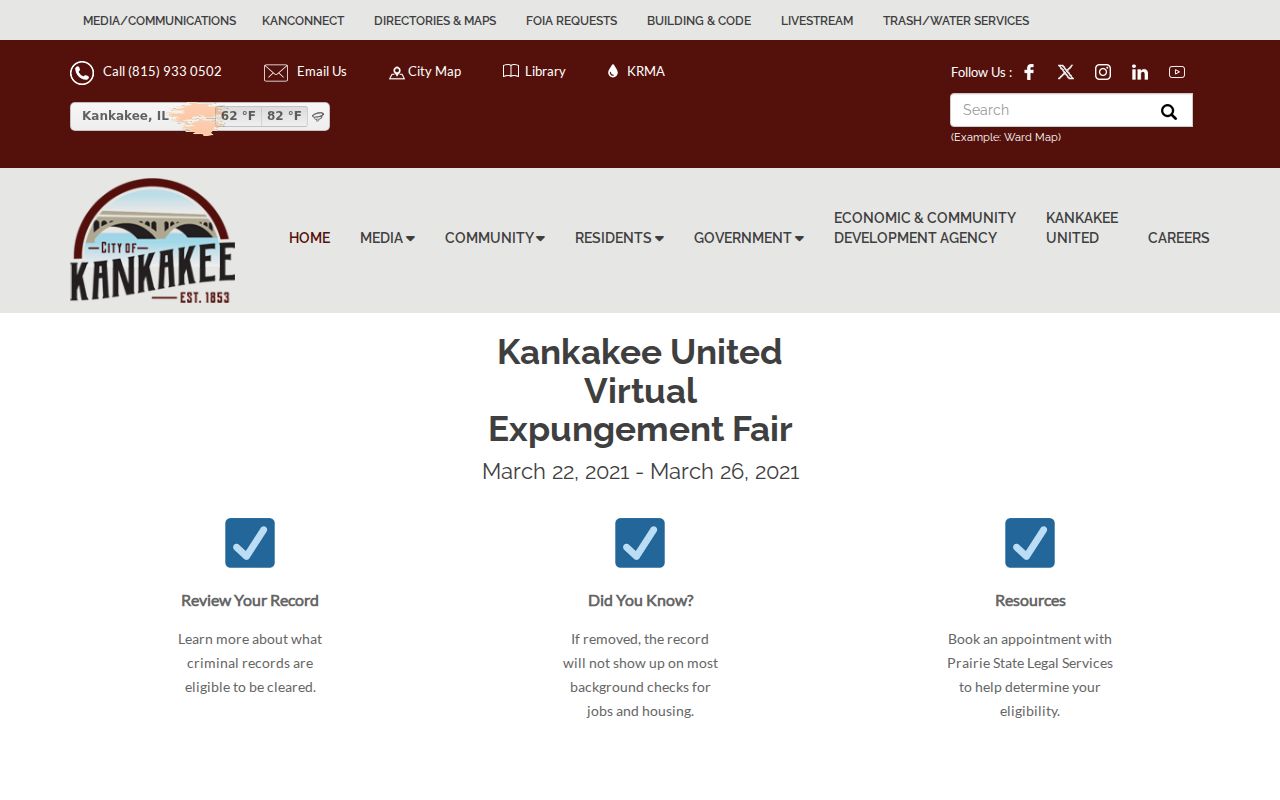
The city source reinforces that eligibility is fact-specific and that a portal check alone is not enough.
Kankakee Case Help and Records
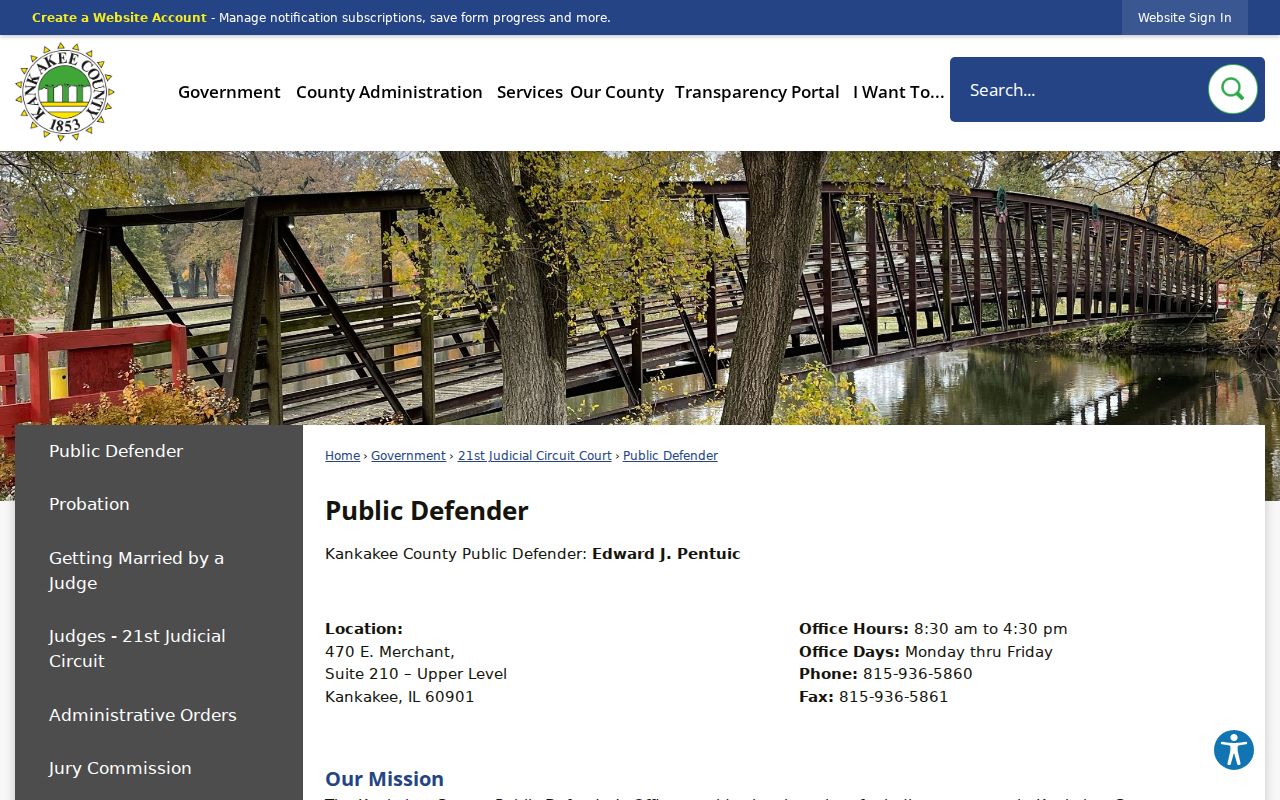
The Kankakee County Public Defender is at 470 East Merchant Street, Suite 210, Upper Level, Kankakee, Illinois 60901. Its published hours are weekdays from 8:30 a.m. to 4:30 p.m., and the phone number is 815-936-5860. The office represents eligible people only after court appointment. It is not a public-record custodian for client files.
The county’s official Public Defender page explains that local role.
For a public docket or judgment, use the Circuit Clerk instead. For appointed legal representation, follow the court and Public Defender process.
Kankakee Record Access Rules
Illinois law gives access to nonexempt public records while protecting defined confidential material. Send police-record requests to the City and court-copy requests to the Circuit Clerk. Ordinary noncommercial FOIA requests generally receive a response within five business days, with a possible five-business-day statutory extension after notice. That deadline governs the response process, not a promise that every requested item will be released.
Key Statutes:
Illinois Freedom of Information Act, 5 ILCS 140 gives access to nonexempt city records and states response and exemption rules.
Uniform Conviction Information Act, 20 ILCS 2635 governs public dissemination of ISP-maintained conviction information.
Criminal Identification Act, 20 ILCS 2630 governs reporting to the state repository and adult expungement and sealing.
Illinois Supreme Court Rule 8 defines Public, Impounded, Confidential, Sealed, and Expunged court classifications.
Public access is not a finding that an allegation is true. Verify identity and read the final disposition before relying on a Kankakee record.